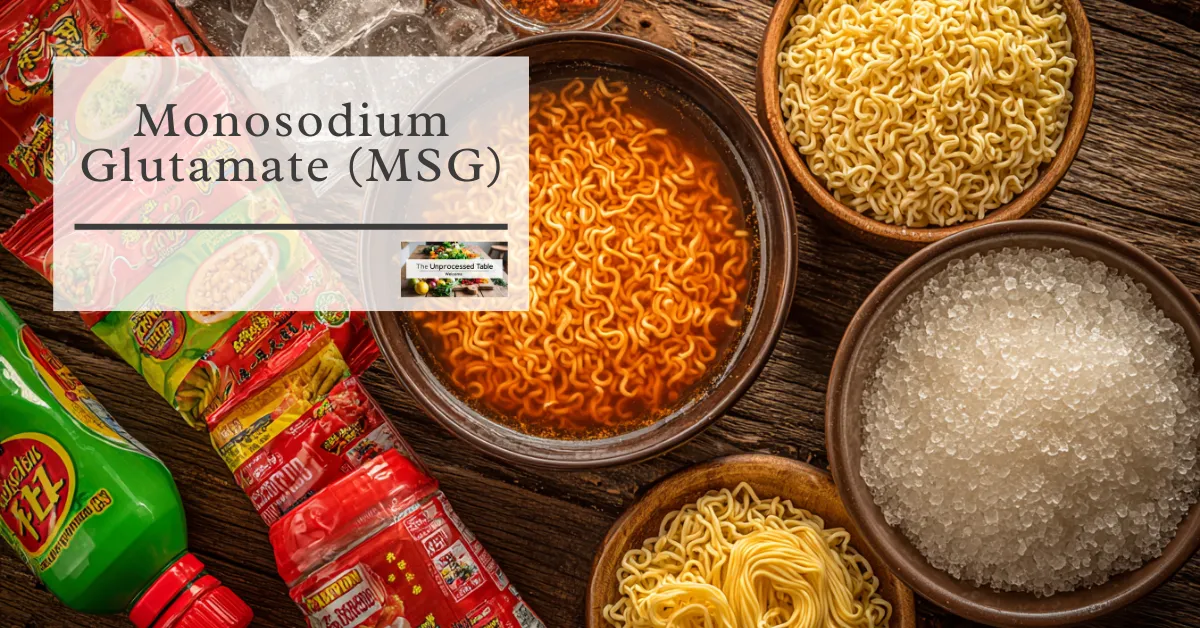
🧂 Monosodium Glutamate (MSG): Flavor Enhancer or Food Villain?

Few ingredients spark as much debate — or confusion — as Monosodium Glutamate (MSG).
Some people avoid it completely.
Others say it’s harmless.
And many don’t realize they’re eating it in natural forms every day.
Let’s slow this conversation down.
🧪 What Is MSG?
Monosodium Glutamate (MSG) is the sodium salt of glutamic acid — an amino acid that occurs naturally in many foods.
Glutamate is responsible for umami, the savory, deeply satisfying taste found in:
Tomatoes
Mushrooms
Parmesan cheese
Seaweed
Bone broth
When glutamate is isolated and added to food in concentrated form, it becomes MSG — a flavor enhancer designed to intensify savory taste.
🍜 Why Manufacturers Use It
MSG is added to foods to:
• Boost flavor without adding extra salt
• Enhance savory notes
• Make processed foods taste richer
• Reduce overall sodium content (because it amplifies flavor efficiently)
It’s commonly found in:
Instant noodles
Seasoning blends
Snack foods
Frozen meals
Canned soups
Fast food
On labels, it may appear as:
Monosodium glutamate
MSG
It can also be hidden in ingredients like “hydrolyzed protein” or “autolyzed yeast extract.”
🔬 The Science & The Controversy
MSG became controversial in the late 1960s after reports of “Chinese Restaurant Syndrome,” a term used to describe symptoms like headaches or flushing after eating foods containing MSG.
Since then, major health organizations — including the U.S. Food and Drug Administration and the World Health Organization — have stated that MSG is generally recognized as safe for the majority of the population when consumed at typical levels.
However:
• Some individuals report sensitivity
• High doses on an empty stomach may cause symptoms in certain people
• Cultural bias played a role in early fear narratives
Today, most research suggests MSG is safe for most people — but bio-individuality matters.
🥣 A Real Food Perspective
Here’s the gentle distinction:
Glutamate naturally occurring in whole foods behaves differently in the body than large amounts of isolated, concentrated MSG added to ultra-processed products.
Real food umami sources include:
✔ Slow-cooked bone broth
✔ Mushrooms sautéed in olive oil
✔ Aged cheeses
✔ Tomatoes roasted until caramelized
✔ Fermented foods
These bring depth without relying on industrial flavor shortcuts.
🌿 Practical Swap Ideas
Instead of:
❌ Flavor packets loaded with MSG
Try → ✔ Homemade broth with garlic, onion, and herbs
❌ Heavily seasoned snack chips
Try → ✔ Roasted chickpeas or nuts with smoked paprika
❌ Instant ramen seasoning
Try → ✔ Miso paste, tamari, or sea salt with real spices
You can build savory flavor naturally — no lab needed.
🌸 Flora Flash
Umami wasn’t officially recognized as the “fifth taste” until the early 1900s, when Japanese chemist Kikunae Ikeda identified glutamate as the compound responsible for savory flavor.
Ironically, the ingredient that enhances umami later became one of the most misunderstood additives in modern food culture.
🧘🏽♀️ The Gentle Takeaway
MSG isn’t the villain it was once made out to be.
For many people, it’s safe in moderate amounts.
But the bigger question remains:
Are we enhancing whole foods —
or engineering ultra-processed ones to taste better than they are?
Flavor matters.
So does ingredient integrity.
And when you understand both, you get to choose what belongs on your plate. 🌿


