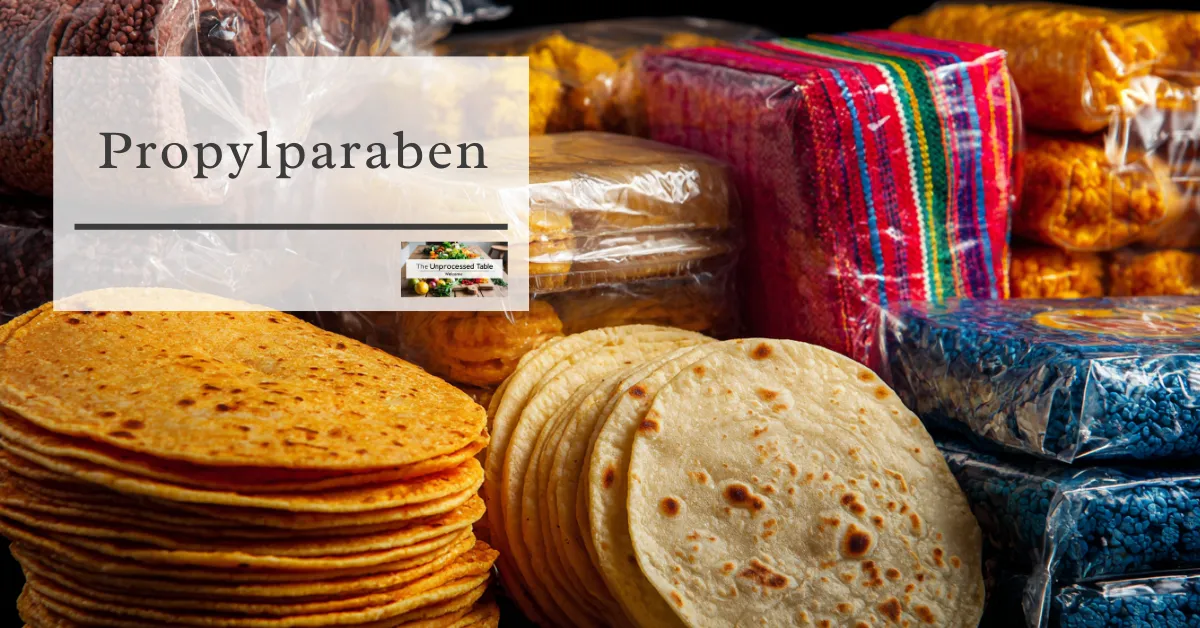
🧂 Propylparaben in Food: Preservative Protection or Unnecessary Exposure?
Some ingredients are added for flavor.
Some are added for texture.
Some are added so food simply… doesn’t grow things.
Propylparaben falls into that last category.
It’s quiet. It’s functional. And unless you read ingredient labels closely, you may never notice it.
Let’s change that — calmly and clearly.
🧪 What Is Propylparaben?
Propylparaben is a synthetic preservative belonging to a class of chemicals called parabens.
Its primary job?
To prevent mold and microbial growth.
Manufacturers use it to:
• Extend shelf life
• Prevent spoilage
• Protect texture and consistency
• Reduce waste in mass production
It’s most commonly discussed in cosmetics — but it has also been used in certain processed foods.
🛒 Where It May Appear
In food, propylparaben has historically been used in:
Packaged baked goods
Tortillas
Snack cakes
Some processed desserts
It may also appear in:
Cosmetics
Lotions
Makeup
Shampoos
On labels, you’ll typically see it listed as propylparaben.
🔬 Why It’s Controversial
The discussion around propylparaben centers on its potential endocrine-disrupting properties — meaning it may mimic estrogen in the body under certain conditions.
Research has shown weak estrogenic activity in laboratory settings, which has led to regulatory review and ongoing evaluation.
In the United States, the U.S. Food and Drug Administration permits propylparaben in limited amounts in certain foods and cosmetics.
However, the European Union has restricted or banned some parabens in cosmetic products due to safety concerns.
Scientific debate continues, particularly around cumulative exposure from multiple products.
🥣 A Real Food Lens
Here’s a simple question:
If food needs a chemical preservative to prevent mold for weeks or months… what is that saying about how it’s made?
Before synthetic preservatives, baked goods:
• Were made fresh
• Spoiled quickly
• Were stored carefully
• Or were preserved through traditional methods
Real food doesn’t last forever.
And that’s not a weakness — it’s biology.
🌿 Gentle Swaps to Reduce Exposure
You don’t need to panic or purge your pantry.
You can simply:
✔ Choose bakery items with shorter shelf lives
✔ Freeze bread instead of buying ultra-preserved versions
✔ Read ingredient lists on tortillas and snack cakes
✔ Look for “paraben-free” in personal care products
Small reductions in repeated exposure matter more than dramatic one-time changes.
🌸 Flora Flash
In the mid-20th century, synthetic preservatives became a symbol of progress. Food that didn’t mold was considered safer and more modern.
Today, many families are rediscovering that “fresh” and “fast-spoiling” are often signs of fewer synthetic stabilizers.
Sometimes yesterday’s bread was meant for today — not next month.
🧘🏽♀️ The Gentle Takeaway
Propylparaben exists to stop growth — not to nourish.
Regulatory agencies allow it within certain limits, but ongoing research continues to examine long-term and cumulative exposure.
You don’t have to live in fear.
But you can live informed.
And sometimes, the most empowering thing you can do is simply flip the package over — and read. 🌿


